research Highlight: Megafire attributes and pre-fire structural legacies shape short-term avian responses in an Atlantic-Mediterranean ecotone
Authors: Fernando García-Fernández, Adrián Regos, Miguel Cánibe, María Vidal & Jesús Domínguez
This research highlight summarizes an article recently published in Fire Ecology that examines fire severity and bird communities.
Key Messages:
Higher fire severity was associated with lower bird species richness and abundance, whereas fire heterogeneity was positively associated with the abundance of multiple functional groups.
Avian responses depended on spatial scale and on how the fire interacted with existing habitat structures.
Conserving the resulting habitat mosaic of unburned refuges, snag-rich stands, and open habitats should guide post-fire management.
A megafire in a changing mountain landscape
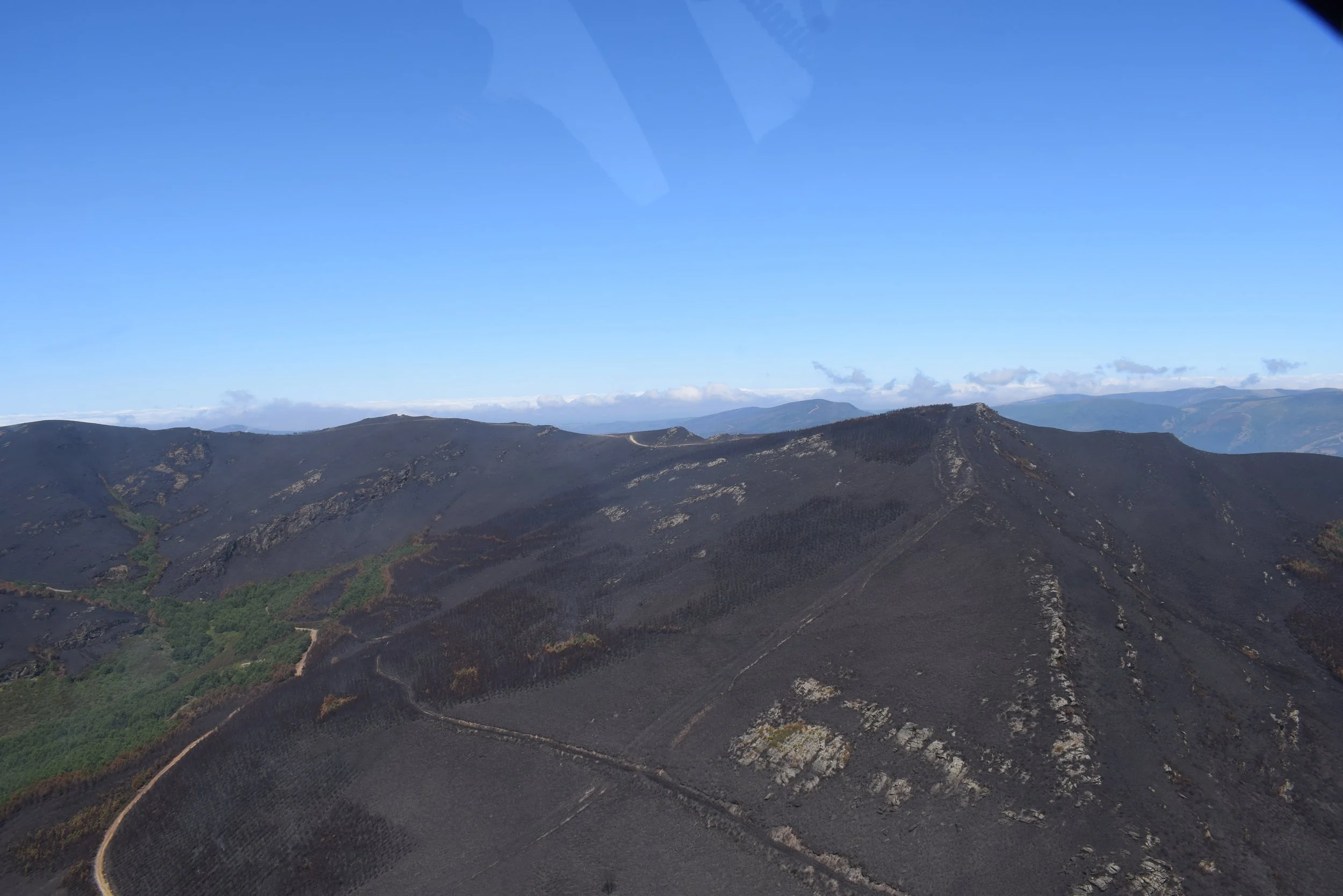
Across southern European mountains, rural abandonment is allowing woody vegetation to expand into formerly managed landscapes. Together with increasingly extreme fire weather, greater fuel loads and continuity can favour large, severe wildfires. In July 2022, a megafire burned nearly 13,000 hectares in Serra do Courel, northwestern Spain, where Atlantic and Mediterranean ecological influences meet.
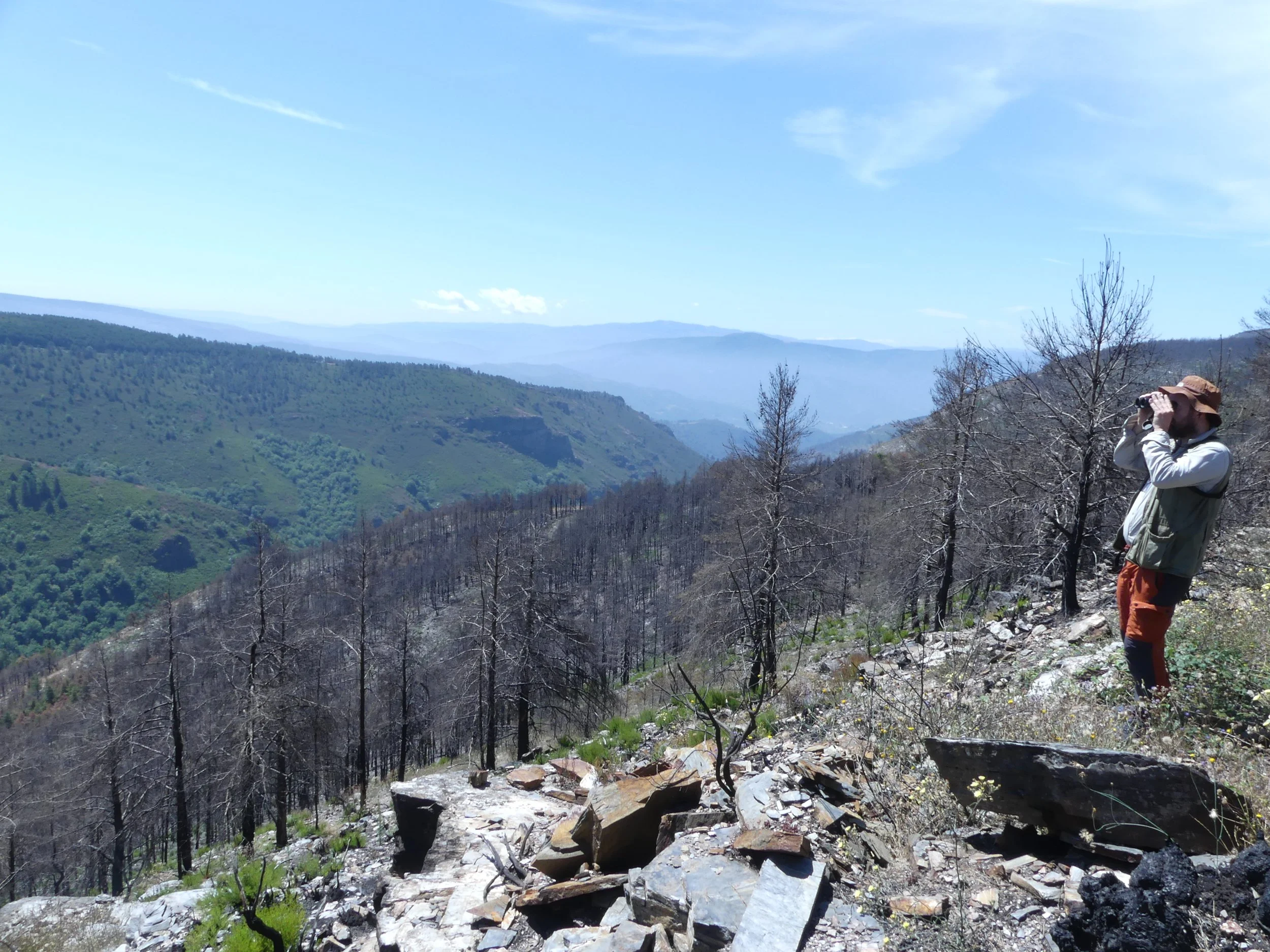
We surveyed birds at 215 locations across burned and unburned habitats during the following breeding season. Our aim was to understand how fire severity, fire heterogeneity (the spatial variability in fire severity), and post-fire vegetation structure jointly shaped bird communities and the responses of different functional groups.
The scale of observation matters
Across the surveyed landscape, burned locations supported fewer species and individuals than unburned locations. This pattern is consistent with habitat loss and fragmentation potentially limiting access to complementary resources after an extensive fire.
Within that broader pattern, however, local fire attributes mattered. Higher fire severity was associated with lower species richness, total bird abundance, and the abundance of many functional groups. In contrast, fire heterogeneity generally showed the opposite relationship: groups negatively associated with severity tended to respond positively to a more heterogeneous burn mosaic.
These findings suggest that fine-scale fire heterogeneity may buffer some immediate impacts even where the wider burned landscape supports an impoverished bird community. Nearby patches affected to different degrees may provide complementary feeding, shelter, and nesting opportunities.
Different parts of the mosaic support different birds
The ecological value of this heterogeneity was closely linked to post-fire vegetation structure, which helped explain how different bird groups responded. Even in severely burned forests, stands rich in standing dead trees, or snags, were positively associated with forest specialists and cavity nesters, particularly species using existing cavities, during the first breeding season after fire. Unburned forest patches supported forest-associated birds, providing refuges that may also serve as sources for recolonisation of nearby burned areas.
Newly opened habitats provided opportunities for open-habitat specialists. The tawny pipit, for example, was recorded only in burned areas, where fire had opened previously shrubby vegetation. Despite their structural simplicity, these temporary habitats can have particular conservation value in mountain landscapes where rural abandonment and woody encroachment are reducing the availability of open areas for these specialists.
Fire heterogeneity alone explained little of the differences in species composition within the burned area. Accounting for its interaction with post-fire vegetation structure, particularly snag-rich stands, improved our ability to explain those differences. Understanding post-fire communities therefore requires considering both the burn mosaic and the structural legacies that remain after fire.
Let the post-fire mosaic guide management
The heterogeneity left by fire provides a practical starting point for management. Protecting unburned refuges, retaining snag-rich stands, and conserving early post-fire open habitats can maintain resources for birds with different ecological requirements. Management decisions should recognise the distinct roles of these patches and preserve their fine-scale variety.
Our study captures the first breeding season after the megafire. Continued monitoring is needed to establish how these relationships change as vegetation regenerates. For early management decisions, the findings support protecting the ecological variety already present within the burned landscape.