Promoting Fire Ecology Research, Education, and Management
The Association for Fire Ecology is an international organization dedicated to improving the knowledge and use of fire in land management. We are scientists, educators, students, managers, practitioners, policymakers, and interested citizens helping to shape the emerging profession and growing field of fire ecology.
AFE news
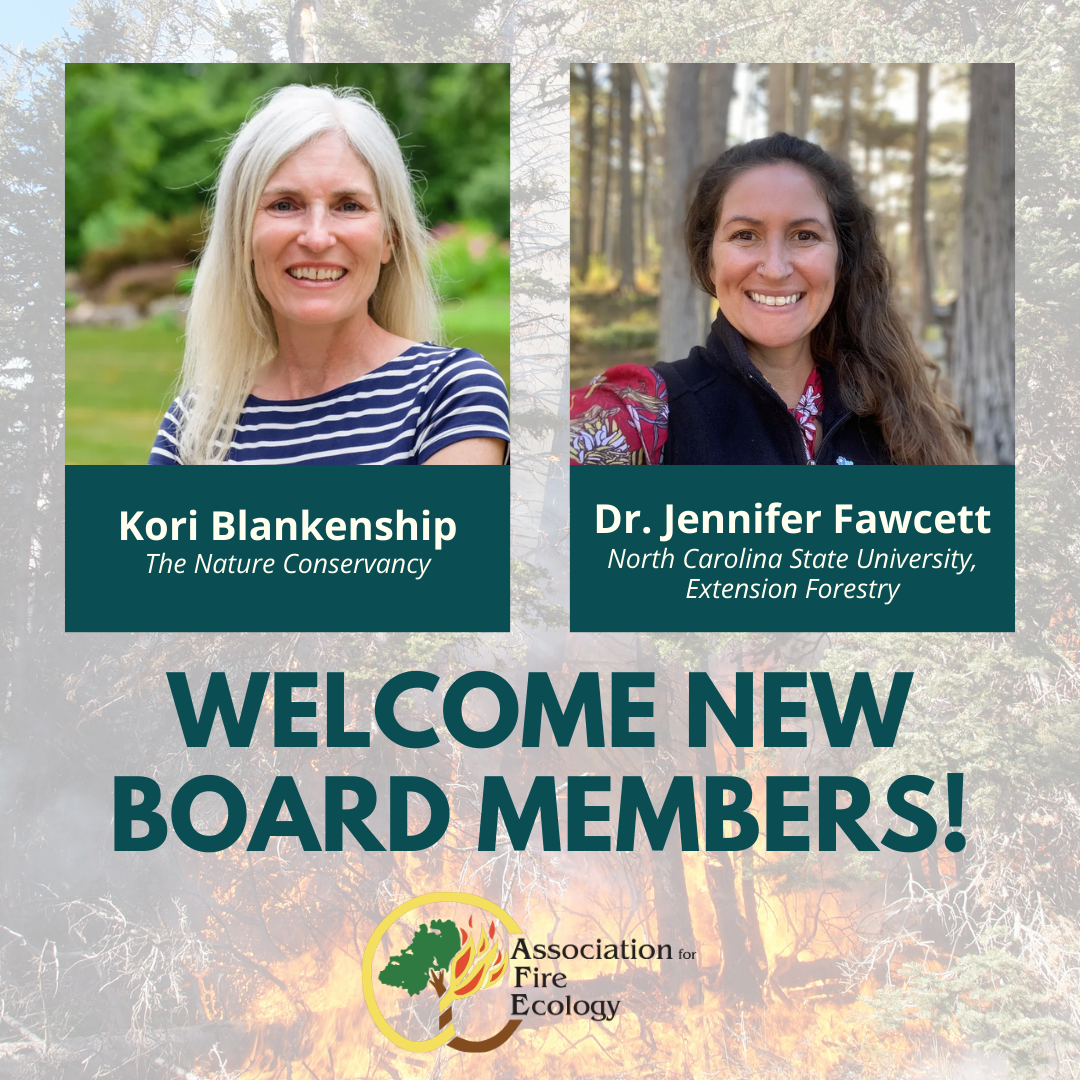
The AFE Board of Directors is pleased to welcome Kori Blankenship and Jennifer Fawcett as new board members!
Contribute to an international study on wildfire resilience, which is gathering place-based insights into the opportunities and challenges of building resilience across fire-prone regions worldwide.
A Beautifully Burned Forest: Learning to Celebrate Severe Forest Fire by Dr. Richard Hutto explores the beauty and ecological importance of severe fire.
A recent issue of Philosophical Transactions of the Royal Society B delves into novel fire regimes under human influence and climate change.
A recording of The Past, Present, and Future of Workforce Development and Education panel from the 4th Southwest Fire Ecology Conference has been uploaded.
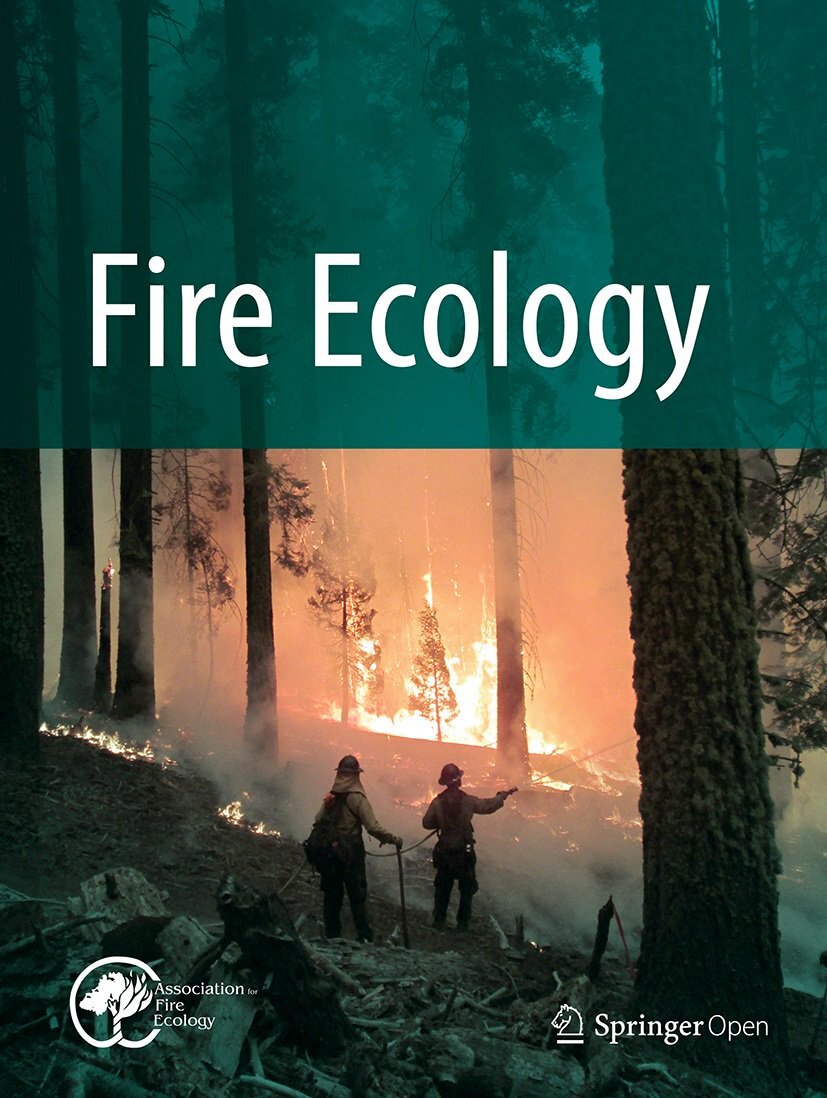
fire ecology Journal
Upcoming EVENTs
The North American Forest Ecology Workshop will take place June 23-26, 2026 in Missoula, Montana.
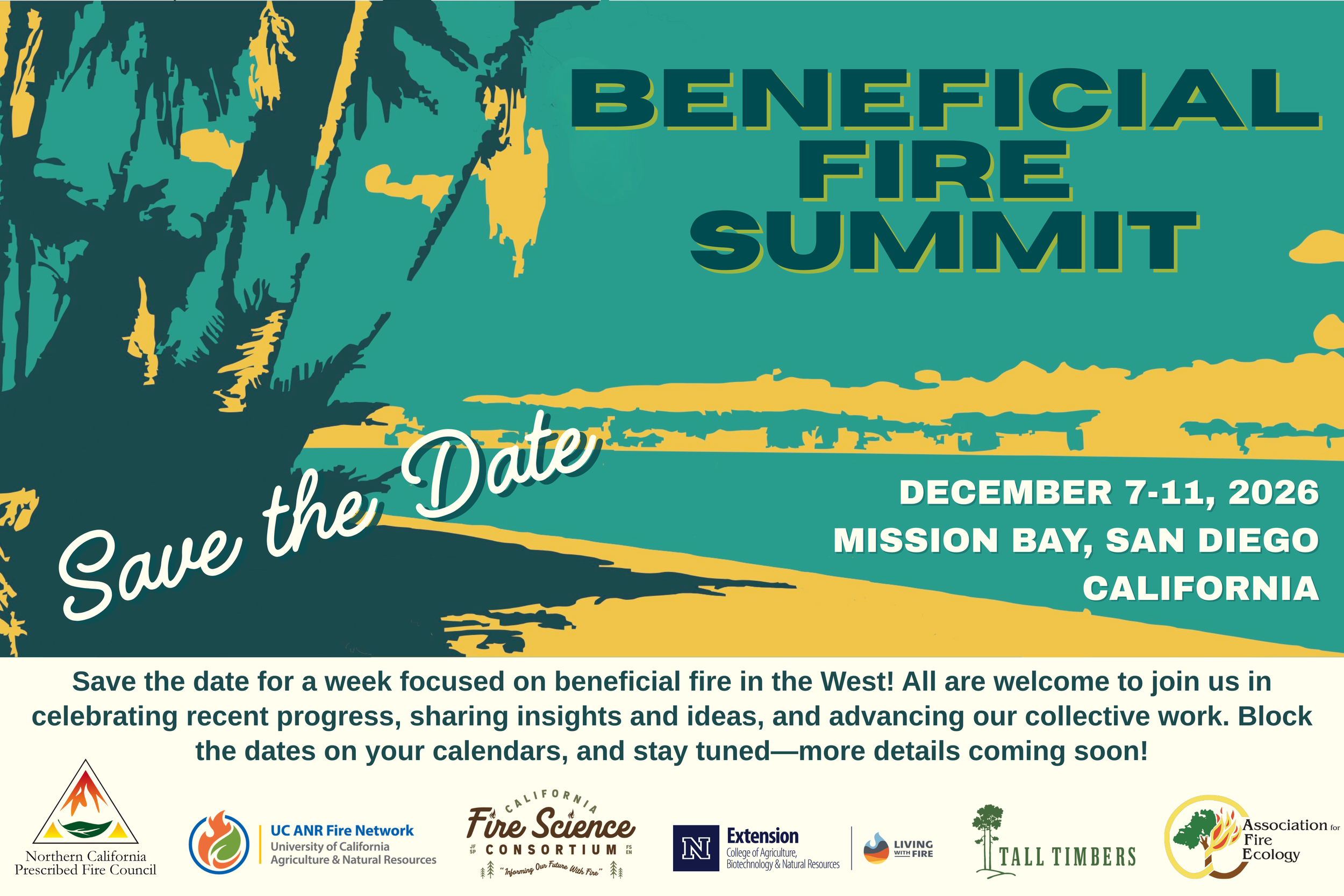
Join the Association for Fire Ecology, UC ANR Fire Network, California Fire Science Consortium, Northern California Prescribed Fire Council, Tall Timbers Research Station, and University of Nevada Extension/Living With Fire in San Diego December 7-11, 2026 for the Beneficial Fire Summit!
SAFE Chapter News
Learn about what several SAFE chapters have been up to in this recap of the Spring 2026 all-chapters meeting.
This year, the University of Montana Fire Club welcomed a diverse lineup of guest speakers whose experiences span from science communication, research, to operational sciences within the wildfire realm.
Nominations for National SAFE Officer positions are now open and will close Friday, April 17th
LATEST JOB POSTINGS
The Washington Prescribed Fire Council (WPFC) brings together a broad and diverse network of partners working to advance the safe, effective, and expanded use of prescribed fire across Washington State. WPFC is seeking a Program Director.
This role supports Hillsborough County's Conservation and Environmental Lands Management Prescribed Fire Program by assisting in all wildland fire activities across properties acquired through ELAPP and other lands managed by HC-CELM. Working alongside the Prescribed Fire Crew Lead, this position provides direct leadership, supervision, and mentoring to the fire management crew with a primary focus on executing prescribed burns and fuel treatments.
As a Land Stewards Fire Crew Member, you will work as part of a team that is highly motivated to restore fire processes across Yurok ancestral lands and beyond. Crew members participate in the implementation of cultural burning aimed at achieving culturally appropriate land management objectives such as habitat restoration, enhancing biodiversity, reducing wildfire risk, restoring and maintaining ecological conditions and processes, and removing invasive and unwanted species. As a Land Stewards Fire Crew Member, you will work with CFMC partners and landowners to restore fire to the landscape. Crew members will participate in professional development courses and workshops, with occasional assignments outside the area to support growth as a student of fire.
This term position will include improving upon previous outreach efforts and establish a successful Prescribed Burn Association (PBA) in the Ridge and Valley region of Alabama and Georgia. Utilizing the PBA to conduct prescribed fires, hosting training and workshops, and working with partners to provide technical assistance will be key to seeing success in this region. Similarly, this position will assist Berry College students in fire training, prescribed fire and other land management applications
afe podcast: Fire Ecology Chats
Kristen Shive, Linnea Hardlund, and Brianna Baker discuss how managers can move forward in handling the loss that giant sequoias have suffered.
Korina Ocampo-Zuleta, Carolina Quintero, and Melisa Blackhall discuss lichen ignitions and climate change implications.
Jeff Chandler and Solomon Dobrowski discuss capturing the full spread of fire attributes from the past and comparing it to present-day wildfires.

An article recently published in Fire Ecology examines underrepresented hazards in wildland firefighting.