research Highlight: Power and planning: a critical discourse analysis of tribal and non-tribal Oregon wildfire protection plans
Authors: Christian Heisler, Max Nielsen-Pincus, Douglas Deur, and Gabe Sheoships
This research highlight summarizes an article recently published in Fire Ecology that examines harmful narratives and how to confront the ideologies within wildfire protection plans.
Landscapes Reflect Cultural Priorities
The displacement of Native peoples from their traditional homelands has created a variety of social and ecological consequences. The replacement of decentralized, place-based burning practices with a bureaucratic fire suppression apparatus remains one of the most notable ecological disruptions in recent memory, as systematic fire suppression effectively removed Native fire from fire-dependent forests and subsequently amplified the presence of coniferous species in Western forests. These consequences demonstrate that forests are cultural landscapes, where the biophysical makeup of forests becomes reflective of the cultural values and priorities that guide their management.
Power & Discourse
We argue that the displacement of Native people and fire practices has been justified and naturalized through the use of settler discourses that characterize pre-contact landscapes as “pristine” and “empty,” thus, obscuring Native influences and histories that are deeply relevant to the social and ecological character of the Western US. Following this notion, we anticipate that these discourses continue to shape modern fire discourses and limit the decision-making power of present-day tribes. In our study, we compare tribal and non-tribal wildfire protection plans using a Critical Discourse Analysis (CDA) methodology.
Wildfire Planning as a Site of Discursive Contention
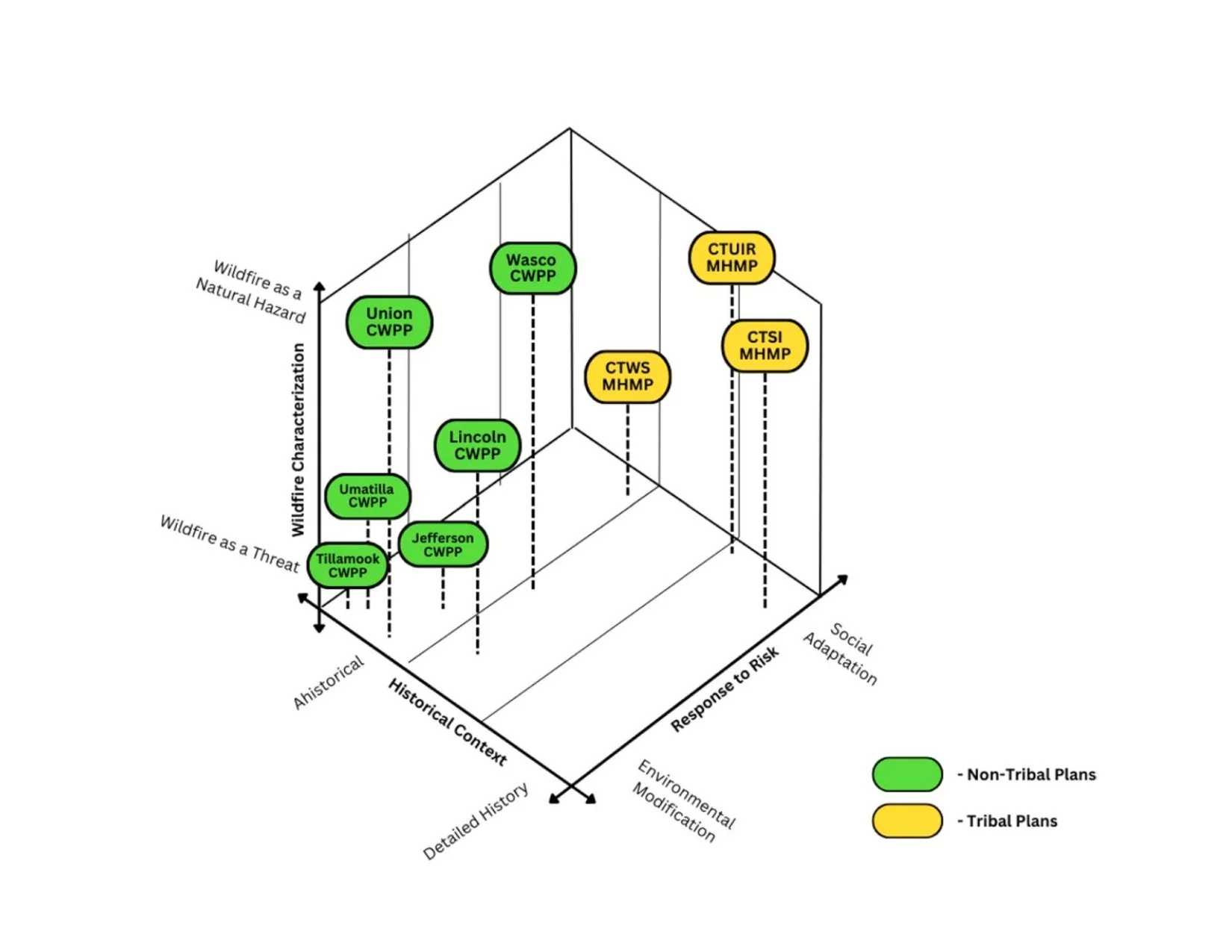
Our analysis reveals notable differences in how tribal and non‐tribal plans (1) contextualize wildfire risk, (2) characterize wildfire itself, and (3) encourage wildfire risk reduction strategies. Non‐tribal plans deployed relatively ahistorical, depoliticized narratives, whereas tribal plans used narratives that contested the legitimacy of settler authority and emphasized the sociopolitical dimensions of wildfire risk. These differences indicate that there are competing narratives surrounding the role of fire in forested environments. Generally speaking, Non-native characterizations of fire were consistent with historical discourses used to displace Native people and practices, and Native plans resisted settler narratives by rearticulating their histories and problematizing systematic wildfire suppression.
Discourses of Displacement
For the last century, State institutions have produced settler narratives that villainize fire and obscure Native presence and influence. Over time, these narratives have become embedded into institutional norms and practices. In this way, the inclusion of settler discourses is not likely a conscious decision made by non-Native authors to erase tribal histories; rather their inclusion reflects their hegemonic nature, as they reshape memory in favor of settler priorities over time. In other words, discourses that erase Native presence and influence have become the default planning narrative, firmly entrenched into the wildfire management apparatus that will continue to shape our forests.
Reframing Fire Narratives and Transferring Power
Collaborative agreements involving tribes may provide opportunities to reframe dominant fire narratives and transfer authority to tribes seeking to exercise their sovereignty. By uprooting anti-Indigenous sentiments from normative planning narratives and shifting management authority to tribal nations wherever possible, collaboration has the potential to reshape common perceptions of wildfire and management philosophies in favor of Native priorities.