Accelerating losses: Multi-scale simulations primarily project bird population losses with climate change
Southwest Fire Science Consortium
Thursday, July 9, 2026 | 11am PT/2pm ET
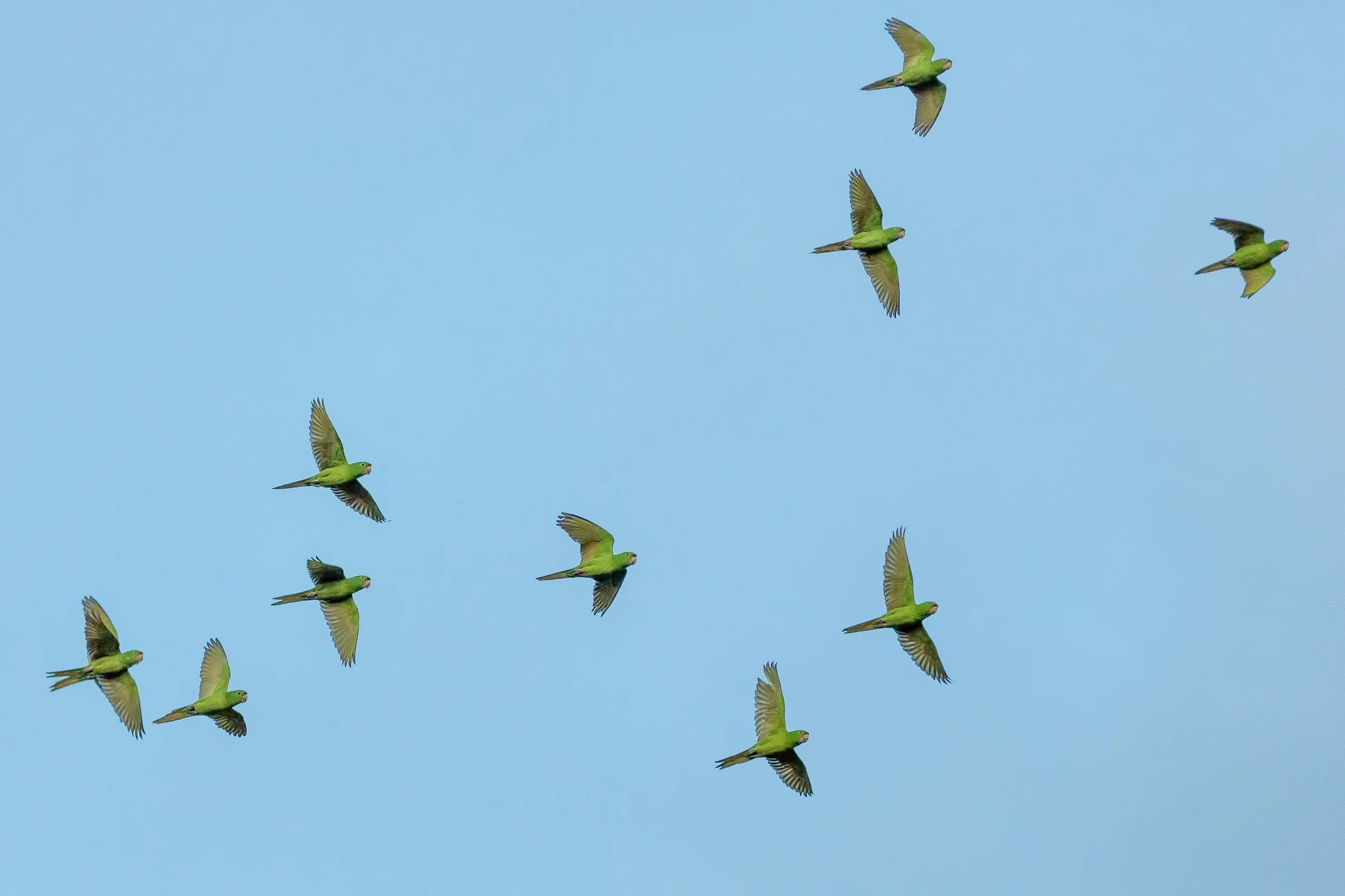
Join the Southwest Fire Science Consortium to learn about a new multi-scale modelling framework that produces future projections for bird populations based on climate signals through vegetation for five climate scenarios. With this unique input, the projections can diverge directionally from climate-envelope simulation approaches for avian habitat specialists. Attendees will learn that of 18 focal species present on the Kaibab National Forest in Arizona, USA, 11 are projected to decline by mid-century, with the strongest signals — all nine pinyon-juniper specialists and both mixed conifer obligates declining across all climate scenarios — providing high-confidence findings for management prioritization. Population simulations which only looked at fire as a disturbance factor produced markedly smaller bird population effects, demonstrating that climate-driven vegetation type shifts, not altered fire regimes alone, are the dominant driver of projected losses.
This webinar builds on a number of Wildlife X Fire educational offerings from the past two years which began with the Consortium’s 2024 Wildlife and Fire Workshop and on a 2025 publication by the speakers.
Presenter: Charles Maxwell, Oregon State University; John Kim, US Forest Service Western Wildland Environmental Threat Assessment Center.