Southwest Fire Science Consortium
August 20, 2026 | 11am PT/2pm ET
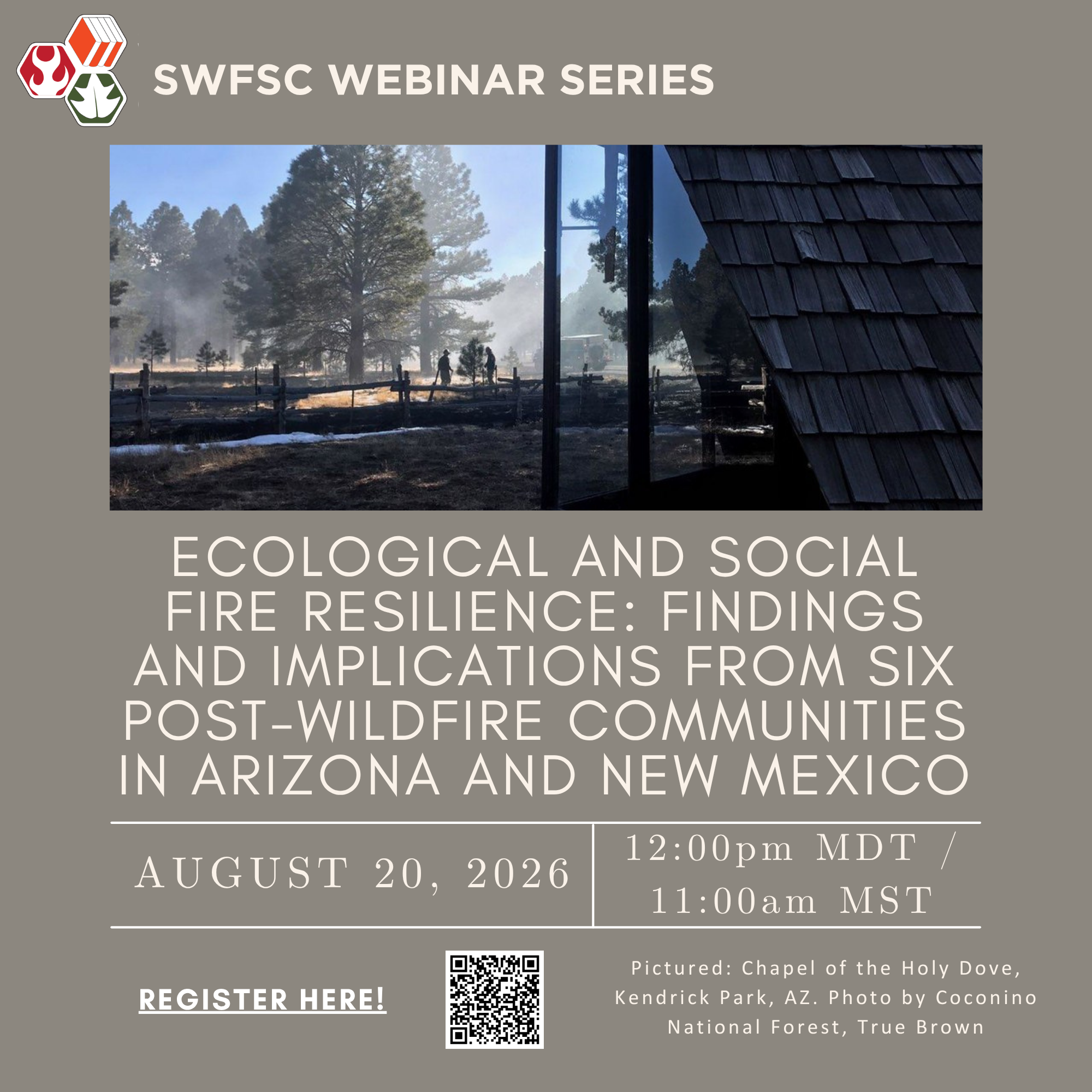
Recovery after a wildfire is affected by both the ecological conditions of the burn area and the components and characteristics of the affected social system. Factors such as pre-fire treatment activities, firefighting resources, post-fire restoration decisions, communication among community members, and landscape characteristics such as precipitation, soil conditions, and proximity to seed sources can affect post-fire conditions, especially the structure and composition of the post-fire plant community. This extended webinar from the Southwest Fire Science Consortium will dig into recovery, resilience, and the relationship between these two processes across six Arizona and New Mexico wildfires that burned in different social-ecological systems. The presenters will discuss findings of social and ecological drivers and indicators of resilience – and their implications – from literature review and meta-analysis, targeted ecological data collection, needs assessment interviews, and workshops following the Backbone, Bighorn, Slide, Telegraph, Ute Park and Dog Head fires. Join us to hear about the status and findings of this work, ask questions, and discuss implications for future research and management. This presentation is based on the peer-reviewed article Connecting wildfire recovery and resilience in social-ecological systems: Post-fire insights from the Southwestern United States.
Speaker: Dr. Clare Aslan, Associate Professor and Director of the School of Earth and Sustainability at Northern Arizona University