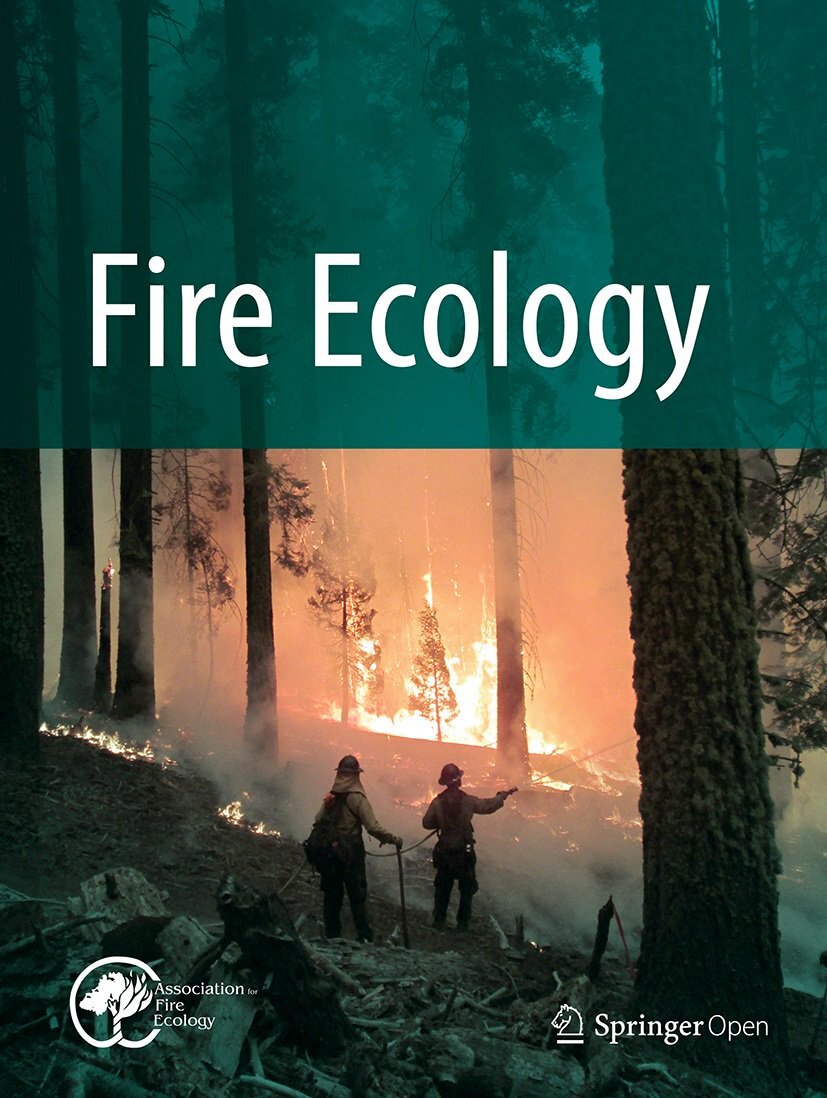
A 34-year retrospective assessment of USFS post-fire reforestation projects in the western US: Actual versus optimal planting sites for forest recovery
California Fire Science Consortium 2026 FFERAL Lecture Series
Thursday, February 12 at 6pm ET
Abstract: We conducted a retrospective assessment (1986–2023) of USFS post-fire reforestation projects to evaluate whether historical planting patterns align with policy to close the national reforestation gap, while also assessing the potential of spatial optimization tools to strengthen that alignment. To do this, we develop a quantitative framework to prioritize reforestation based on where planting is (1) necessary to maintain forest cover (e.g. where seed limitation prevents natural recovery), (2) likely to succeed (e.g. where climate can support establishment), and (3) where its operationally feasible (e.g. proximal to roads). We then use spatial optimization to compare simulated plantings to USFS replanting projects. Whereas most sites the USFS planted after fires (61%) were in locations predicted to naturally regenerate, our simulations found sites in the same fires with lower seed availability (mean difference: 21%) and natural regeneration potential (mean difference: 22%). Our study exposes some of the trade-offs and constraints resource managers must navigate when making planting decisions and demonstrates the utility of a spatially optimized decision support framework for reforestation planning.
Presenter: Solomon Dobrowski, PhD
Bio: I am a professor of landscape ecology in the Department of Forest Management at the University of Montana. I study forestry, climate risks to forests, wildfire, forest regeneration, and conservation biogeography. I teach in and out of the classroom and I’m an avid fan of trees. Beyond academia, I am a Cofounder and Chief Scientist at Viridian Ecosystems where I lead applied science and analytical strategies. I also serve on the leadership team for the USGS Northwest Climate Adaptation Science Center and as a science advisor for Blue Forest. These roles put me at the intersection of scientific innovation and applied resource management.