Wildfire smoke: drivers, impacts, and solutions
California Fire Science Consortium
March 11, 2pm ET
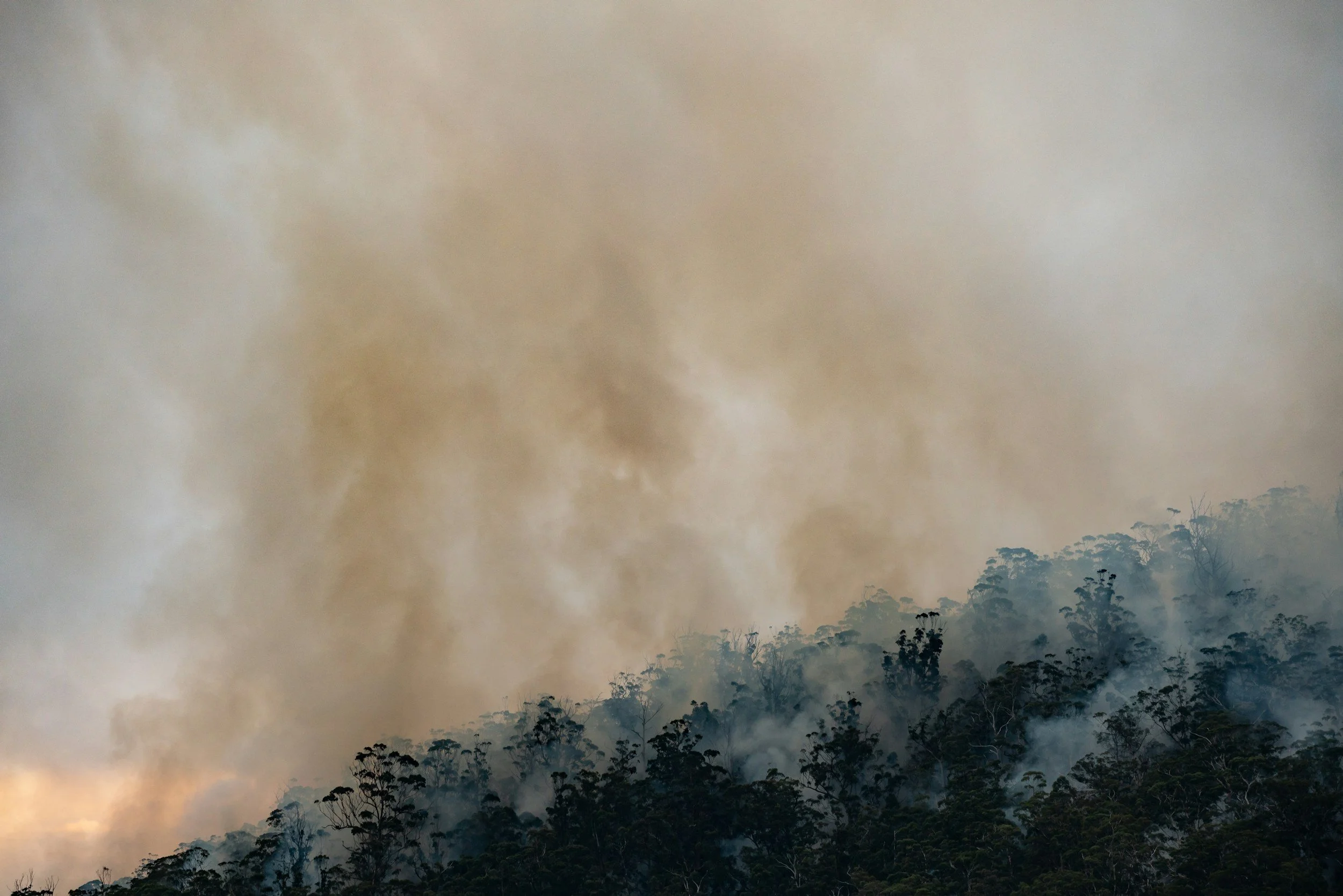
Abstract: We use a range of data to quantify the past and future drivers of wildfire smoke across the US, the impacts of exposure to this smoke on a range of health outcomes, and the efficacy of proposed solutions to reduce smoke emissions and exposures. We find that smoke exposure is undoing decades of air quality improvements in the US and leading to tens of thousands of premature deaths across the US per year, a number that could double under future climate change. We find that efforts to limit smoke emissions and exposures through large-scale use of prescribed fire could meaningfully reduce these impacts, but would require at least a decade of sustained effort.
Presented by: Marshall Burke, Professor, Doerr School of Sustainability | Center on Food Security and the Environment, Stanford University
Marshall Burke is Professor of Global Environmental Policy in the Doerr School of Sustainability at Stanford University, a Senior Fellow at the Center on Food Security and the Environment, the Freeman Spogli Institute for International Studies, the Stanford Woods Institute for the Environment, and the Stanford Institute for Economic Policy Research. He is also a Research Fellow at the National Bureau of Economic Research.
His research uses tools from the social and natural sciences to measure environmental change, understand how society is impacted by this change, and evaluate how it can respond. His work spans topics including climate change, air pollution, food security, and poverty measurement, and combines methods from economics, statistics, remote sensing, and machine learning.
He holds a PhD in Agricultural and Resource Economics from UC Berkeley, and a BA in International Relations from Stanford.
He directs the Environmental Change and Human Outcomes Lab (ECHO Lab) at Stanford, is co-founder of Atlas AI, and co-creator of the Environmental Hazards Adaptation Atlas.