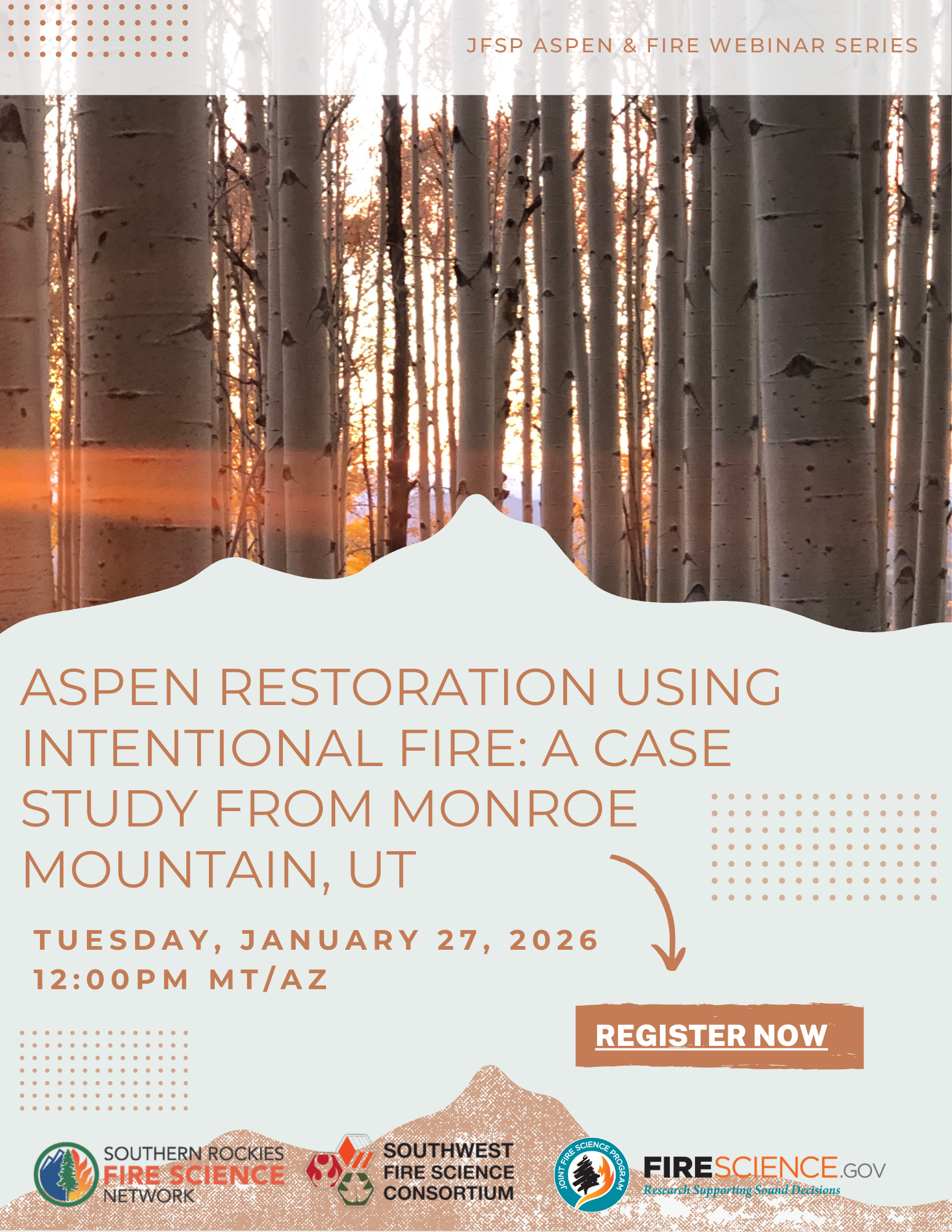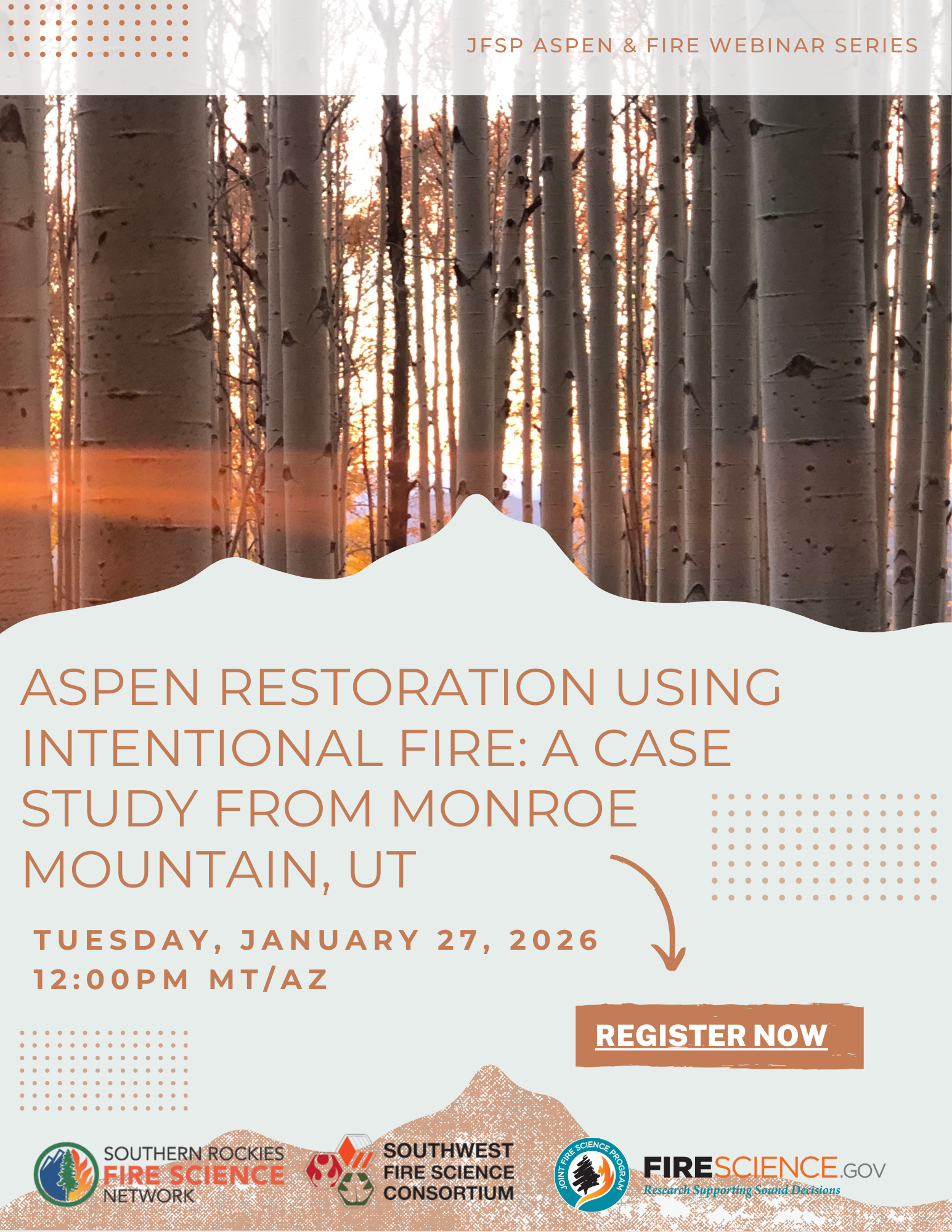
Aspen Restoration Using Intentional Fire: A Case Study from Monroe Mountain, UT
Southern Rockies Fire Science Network and Southwest Fire Science Consortium
Tuesday, January 27 at 2pm ET
Aspen ecosystems support a wide array of wildlife, including mule deer, elk, Northern goshawk, migratory birds, amphibians, and insects. It has been estimated that 70% of the properly functioning aspen ecosystems on Monroe Mountain, Utah have been lost. These declines are due to a lack of natural disturbances such as fire, too much overgrazing and browsing my ungulates, and the expansion of conifers. Because aspen trees are shade intolerant and sprout from root suckers, they grow back quickly after fire. This presentation from speakers with the U.S. Forest Service and Brigham Young University will explore the collaborative Monroe Mountain Aspen Ecosystem Restoration Project, an innovative project which used high intensity and severity prescribed fire, as well as conifer thinning, to improve the health of aspen ecosystems across a 175,000-acre mountain range. This is the second in a series of webinars on Aspen and Fire from the Fire Science Networks; a recording of the first in the series may be found here: www.youtube.com/watch?v=kGPWMl__psM
Presenters: Jason Kling, District Ranger with the Richfield District of the Fishlake National Forest; Sam St. Clair, Professor with Brigham Young University